
IVF Due Date Calculator
Calculate your estimated due date based on the embryo transfer date.
“Want to better understand your conception timeline? Try our Ovulation Calculator for more accurate estimates.”
What is an IVF Pregnancy Due Date?
An IVF pregnancy due date is the estimated day your baby is likely to be born after conception through in vitro fertilization (IVF). Unlike natural conception, where doctors often calculate due dates from the first day of your last menstrual period (LMP), IVF allows for a more precise estimation because the exact date of fertilization or embryo transfer is known.
How to Calculate Your Due Date with IVF
For IVF pregnancies, due dates are calculated differently depending on the type of embryo transfer:
3-Day Embryo Transfer:
If your embryo was transferred 3 days after fertilization, your due date is usually calculated by adding 266 days (about 38 weeks) from the day of fertilization. This is because the embryo is still very early in its development.5-Day Embryo Transfer (Blastocyst):
If the embryo was transferred 5 days after fertilization, it is a bit more developed. The due date is still calculated from the fertilization day, but doctors make a small adjustment to account for the extra development before transfer.
Factors That Can Slightly Shift Your IVF Due Date
Even with IVF, some factors may affect the timing of your delivery:
- Early or late implantation
- Multiple pregnancies (twins or more)
- Maternal age or uterine conditions
- Placental issues or preterm labor
These factors mean the due date is always an estimate, although IVF generally provides a more precise window than natural conception.
IVF Due Date Week-by-Week Timeline
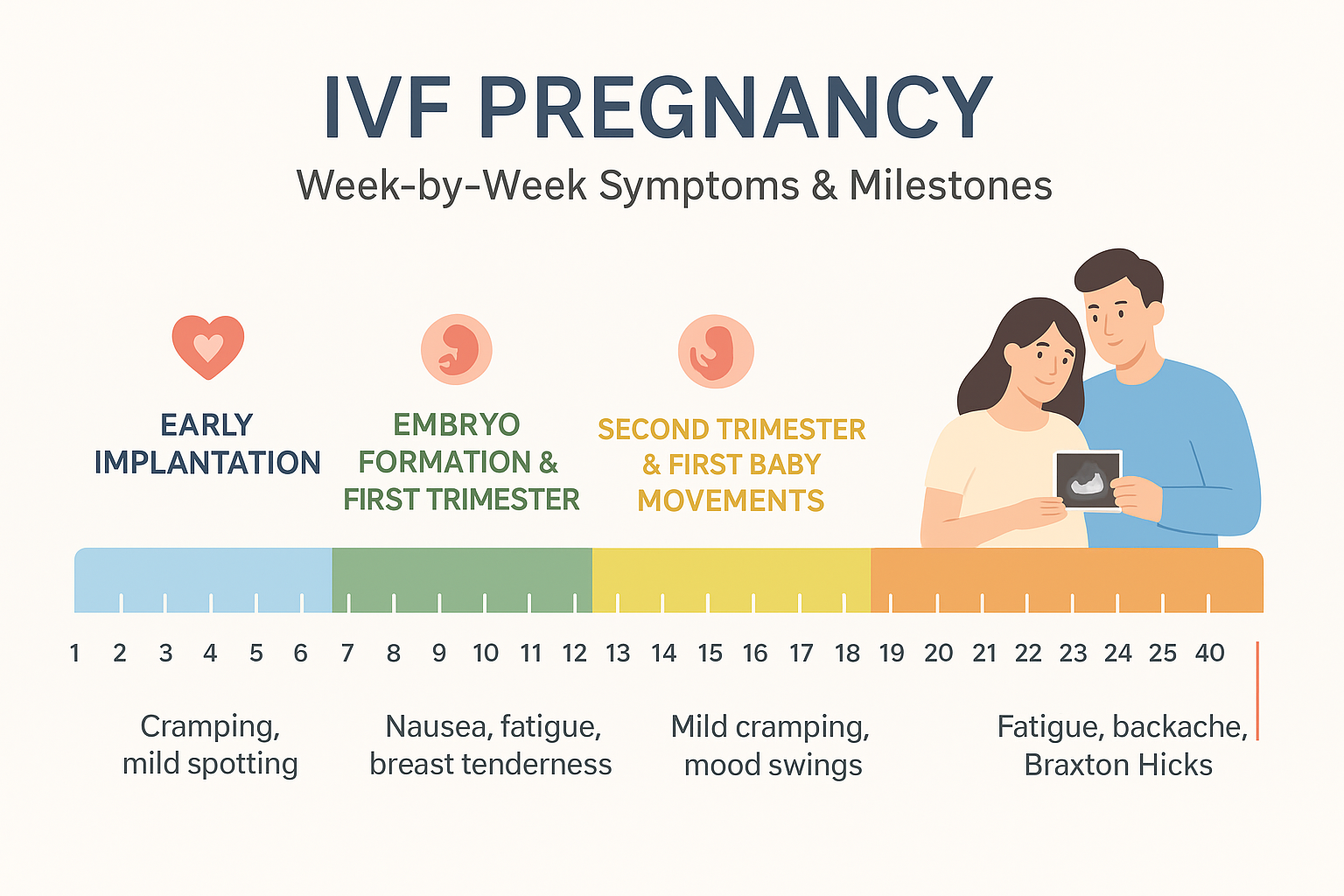
Once you know your estimated due date, you can track your pregnancy through each trimester:
- First Trimester (Weeks 1–13): Focus on confirming the pregnancy, early ultrasounds, and initial prenatal care.
- Second Trimester (Weeks 14–27): This “honeymoon period” often allows you to announce your pregnancy, feel baby movements, and begin nursery planning.
- Third Trimester (Weeks 28–40+): Final preparations for labor, birthing classes, hospital planning, and finishing ultrasounds.
Your IVF due date calculator makes it easier to organize each stage and anticipate your baby’s arrival
What other ways can you calculate your IVF Due Date?
Besides using a calculator, there are other ways to estimate your due date:
- If your embryo transfer happened on a day other than Day 3 or Day 5 (for example, a Day 6 transfer), you can still estimate your due date yourself: subtract the embryo’s age in days from 266, then add that number of days to your transfer date. For example, for a Day 6 transfer: 266 − 6 = 260 days added to your transfer date.
- For donor eggs or embryos, count 266 days from egg retrieval or embryo thawing to determine your delivery date.
- Early ultrasounds around six to eight weeks can confirm and slightly adjust your due date based on actual embryonic development.
- Using your clinic records for fertilization, retrieval, and transfer dates ensures the most precise calculation possible.
For more detailed information on IVF due dates and embryo transfer protocols, visit the American Society for Reproductive Medicine (ASRM)
IVF Pregnancy Symptoms and Timing
After an IVF procedure, many pregnancy symptoms appear around the same time as in a natural pregnancy, usually about two weeks after embryo transfer. Because IVF involves hormone treatments, some symptoms may feel stronger or start slightly earlier. Common early signs include:
- Nausea or morning sickness
- Fatigue or feeling unusually tired
- Breast tenderness or swelling
- Mild cramping or twinges in the lower abdomen
- Mood swings or emotional changes
- Frequent urination
- Occasionally, implantation bleeding or bloating
These symptoms indicate that implantation has occurred and your body is responding to the pregnancy. While every woman’s experience differs, noticing several of these signs is common in IVF pregnancies.
Get Weekly Pregnancy & Fertility Tips
Get helpful, evidence-based insights on implantation, early pregnancy, fertility, ovulation, and pregnancy testing, delivered straight to your inbox every week.
Frequently Asked Questions
How does IVF get you pregnant?
IVF (In Vitro Fertilization) helps you get pregnant by fertilizing the egg and sperm outside the body in a lab. When an embryo forms, doctors place it into the uterus, where it can implant and develop into a pregnancy.
What is an IVF baby called?
An IVF baby is simply called a normal baby conceived through IVF. Some people also use the term “test-tube baby,” but medically and socially, they are just like any other baby.
Is it painful to have IVF?
IVF is generally not very painful, but some steps may cause mild discomfort.
Hormone injections can cause slight soreness.
Egg retrieval is done under sedation, so you usually don’t feel pain.
Embryo transfer feels like a regular pelvic exam.
Overall, most women describe IVF as uncomfortable but not painful.
Is husband’s sperm used in IVF?
Yes. If available and healthy, the husband’s or partner’s sperm is used.
If sperm quality is an issue, donor sperm can be used as an alternative.
Are all IVF babies female?
No. IVF babies can be male or female, just like natural pregnancies.
The gender depends on the sperm that fertilizes the egg.
IVF does not automatically create female babies.
What are the risks of IVF?
IVF is generally safe, but like any medical procedure, it carries some risks. Possible risks include:
Ovarian Hyperstimulation Syndrome (OHSS): mild to moderate bloating, discomfort; rarely severe.
Multiple pregnancy: higher chance of twins if multiple embryos are transferred.
Procedure-related risks: slight bleeding or infection after egg retrieval (rare).
Emotional stress: the process can be mentally and emotionally demanding.
Most of these risks are uncommon and are carefully managed by fertility specialists.
What is an IVF Due Date Calculator?
An IVF Due Date Calculator is a tool that helps you estimate your baby’s expected arrival date based on your IVF treatment details. Instead of using the last menstrual period (LMP), this calculator uses information like egg retrieval date, embryo transfer date, or the day of conception. This makes the due date more accurate for IVF pregnancies.