
Implantation Calculator & Calendar
Enter your ovulation date, or your last period date and cycle length, to see your likely implantation window. Implantation usually happens 6 to 12 days after ovulation, most often around day 9.
Calculate When Implantation May Have Happened
Choose a method, enter your date and press calculate
Count from the first day of one period to the day before the next. Most cycles are 21 to 35 days.
Note:
Implantation typically occurs 6 to 12 days after ovulation. Individual cycles vary, so this calculator gives an estimate based on average timing. Your dates stay in your browser and are never sent or stored. Consult a healthcare provider for personal advice.
Your Implantation Timeline
Calendar
Your implantation timeline will appear here
This calendar shows estimated dates based on your input. Individual cycles may vary.
Your Implantation Results
Estimated Ovulation
Implantation Window
6 to 12 days after ovulation
Best Test Date
14 days after ovulation, around the day your period is due
Timeline Summary
Key dates at a glance
This calculator provides educational estimates only and cannot confirm pregnancy. Always consult your healthcare provider for personal medical advice about your fertility and pregnancy planning.
What’s Next?
If you’re spotting today and wondering whether it could be implantation bleeding or your period starting, try our Implantation vs Period Bleeding Tool. It helps you compare your symptoms, spotting color, and timing to get a clearer idea of what’s happening in your cycle.
You can also explore our Ovulation Calculator, Due date Calculator and to better understand your fertility and early pregnancy signs.
Implantation is the process where a fertilized egg attaches itself to the lining of the uterus. This is a crucial step in early pregnancy because it allows the embryo to receive oxygen and nutrients from the mother.
After fertilization, the embryo travels through the fallopian tube and reaches the uterus, where implantation usually occurs within a specific time window.
Our calculator estimates your implantation window based on your ovulation date or menstrual cycle.
- Ovulation (Day 0): The ovary releases an egg
- Fertilization (Day 0–1): Sperm fertilizes the egg within 12–24 hours
- Embryo Development (Days 2–5): The fertilized egg divides and moves toward the uterus
- Implantation Window (Days 6–12): The embryo attaches to the uterine lining
Most implantations occur between 6 to 12 days past ovulation (DPO), with the highest probability around 8–10 DPO.
According to research published in the New England Journal of Medicine, implantation most commonly occurs between 6 and 12 days after ovulation.
When to Use the Implantation Calculator
You can use the Implantation Calculator after ovulation or when trying to conceive. It helps you estimate the days when implantation is most likely to occur, usually 6–12 days after ovulation, most often around 8–10 DPO.
How to Use It
- Enter your LMP (first day of your last period): This sets your cycle timeline.
- Select your average cycle length: Most women have cycles between 26–32 days.
- Click “Calculate”: The tool shows your estimated ovulation date, fertile window, and implantation window.
- Check the implantation calendar: See predicted days for implantation after ovulation.
- Save or track your results: Revisit anytime to monitor early pregnancy signs such as spotting, cramping, or fatigue, and plan the best time for a pregnancy test.
Using the calculator at the right time helps you understand your cycle better, detect early pregnancy successfully, and reduce confusion with PMS symptoms.
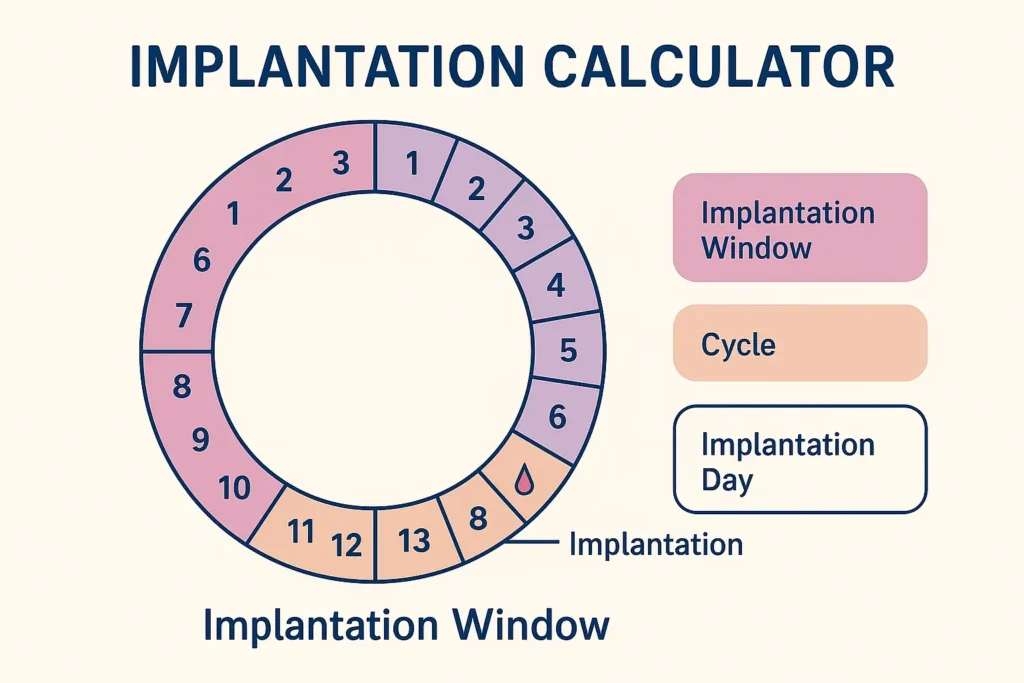
Understanding implantation timing can help you interpret early symptoms more accurately and avoid confusion during the waiting period.
- 6 DPO: Earliest possible implantation, but quite rare
- 7–8 DPO: Chances begin to increase as the embryo reaches the uterus
- 8–10 DPO: Most common implantation window, when the majority of pregnancies implant
- 11–12 DPO: Later implantation, still within the normal range
This timeline gives you a clearer idea of when implantation is most likely to occur and when your body may start producing hCG (the pregnancy hormone)—which is essential for a positive pregnancy test.
If you’re trying to get pregnant, an implantation calculator is one of the most valuable fertility tools available. It helps you identify when a fertilized egg may implant into the uterus — a crucial early step in pregnancy. By understanding your ovulation and implantation window, you can increase your chances of conception naturally and choose the best time to take a pregnancy test for accurate results.
An implantation calculator works hand in hand with ovulation tracking, providing deeper insights into your fertility timeline and helping you stay aware of your body’s early pregnancy signs.
Using an implantation calculator along with daily symptom tracking can help detect early signs of pregnancy before your missed period. Noticing subtle changes like mild cramps, light spotting, fatigue, or tender breasts can provide early clues that implantation may have occurred.
By recording these patterns, you’ll get a clearer picture of your fertility journey and know exactly when to take a pregnancy test. This makes the implantation calculator an excellent companion for women actively trying to conceive.
Implantation is the point when your body starts producing hCG (pregnancy hormone). However, it takes time for hCG levels to rise enough to be detected.
- Testing at 8–10 DPO is often too early
- Testing at 12 DPO may give early results
- Testing at 14 DPO (missed period) is most reliable
Testing too early can lead to a false negative, even if you are pregnant. Many women get a negative result simply because they test too early, not because they aren’t pregnant.
For best results, test after your missed period using first-morning urine.
Not everyone notices clear symptoms, and it’s essential to remember that these signs can also result from normal hormonal changes before a period. Still, some women experience subtle physical sensations during their implantation window.
- Implantation Bleeding: This refers to light spotting—usually pinkish or brownish discharge—that is much lighter than a normal period and may last from a few hours to a couple of days.
- Mild Cramping: You may feel gentle pulling or prickling sensations in the lower abdomen. These cramps are typically less intense than regular menstrual cramps.
- Breast Tenderness: Much like premenstrual symptoms, your breasts may feel sore, swollen, or heavy due to hormonal fluctuations.
- Basal Body Temperature (BBT) Dip: Those tracking their BBT sometimes notice a slight, one-day temperature dip around the time implantation occurs.
Although every cycle varies, the timing of implantation remains remarkably consistent in relation to ovulation.
Ovulation: This occurs when the ovary releases an egg, marking the beginning of your most fertile phase.
Fertilization: If sperm is available, fertilization usually happens within 12–24 hours after ovulation.
Travel and Development: The fertilized embryo then journeys toward the uterus over several days, continuing to divide and develop.
Implantation Window: Based on landmark research published in the New England Journal of Medicine, most implantations take place between 6 and 12 days after ovulation, with 9 days post-ovulation being the most common.
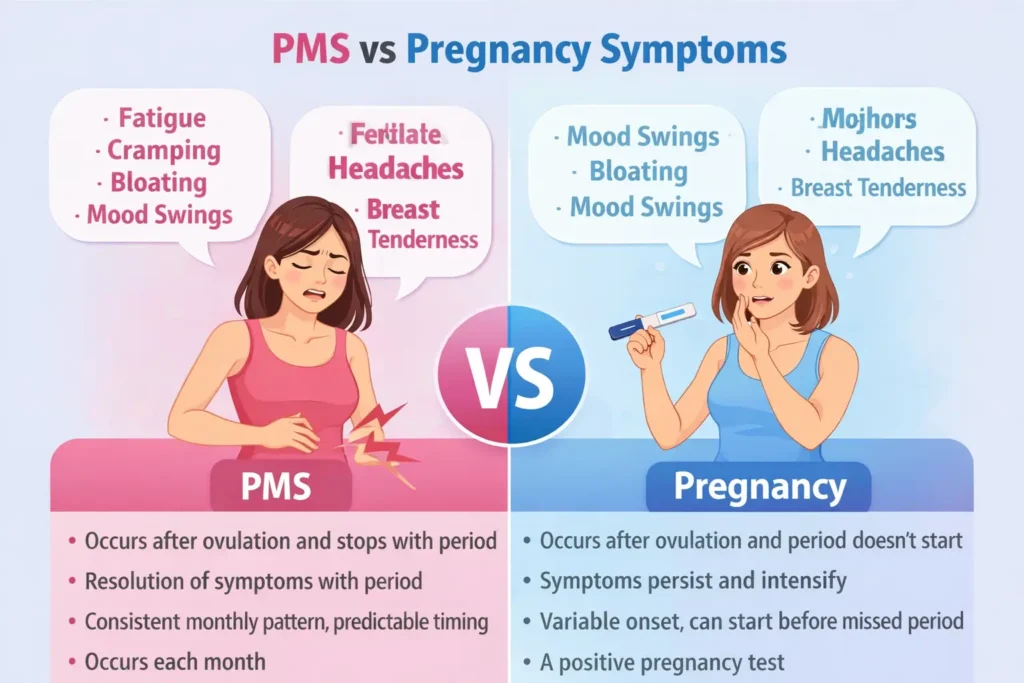
Many women confuse implantation symptoms with PMS (pre-menstrual syndrome) symptoms, since they often feel quite similar. However, there are a few key differences. Implantation symptoms usually appear 6–12 days after ovulation, when a fertilized egg attaches to the uterine lining. Common signs include light spotting, mild cramps, fatigue, and slight mood changes.
On the other hand, PMS symptoms occur a few days before your period and often include bloating, breast tenderness, mood swings, and heavier cramps. The main difference is that implantation bleeding is light and short-lived, while PMS bleeding leads to a normal period flow.
If you notice light spotting and mild cramps before your expected period, it could be a sign of implantation — an early indicator of pregnancy.
Get Weekly Pregnancy & Fertility Tips
Get helpful, evidence-based insights on implantation, early pregnancy, fertility, ovulation, and pregnancy testing, delivered straight to your inbox every week.
Frequently asked Questions
How to calculate implantation date
To calculate your implantation date, first find your ovulation day. Implantation typically occurs 6 to 12 days after ovulation, with most cases happening around 8 to 10 DPO. You can also use an implantation calculator to get a more accurate estimate automatically.
What day is most common for implantation?
The most common day for implantation is around 9 days after ovulation. However, it can occur anytime between 6 to 12 days post-ovulation, depending on your cycle and individual factors.
How to know when implantation is successful?
Successful implantation may cause subtle early pregnancy signs like light spotting, mild cramping, fatigue, or breast tenderness about 6 to 12 days after ovulation. Some women may also notice slight bloating or changes in their basal body temperature patterns.
However, the only reliable way to confirm successful implantation is by taking a pregnancy test a few days later, once hCG hormone levels start increasing in the body.
How long after implantation will I test positive?
You can usually get a positive pregnancy test about 2 to 4 days after implantation, once your body starts producing enough hCG (human chorionic gonadotropin) for detection. However, for the most accurate result, it’s best to take a pregnancy test around 12 to 14 days after ovulation or on the day your period is due.
What are the first signs of implantation?
Implantation bleeding usually occurs about 6 to 12 days after ovulation, which is roughly the time when you are considered around 3 to 4 weeks pregnant (calculated from the first day of your last menstrual period, not from conception). However, pregnancy “age” can vary depending on your cycle length and ovulation timing, so it is not an exact measurement.
What are 100% signs of pregnancy in the first week?
There are no 100% sure signs of pregnancy in the first week. Early symptoms like mild cramping, fatigue, or light spotting can happen, but they are not reliable. The only way to confirm pregnancy is with a pregnancy test after a missed period or a blood hCG test.
How many days pregnant are you at implantation?
Implantation usually happens about 6 to 12 days after ovulation, which is roughly around 3 to 4 weeks of pregnancy when counted from the first day of your last menstrual period.
Related Articals
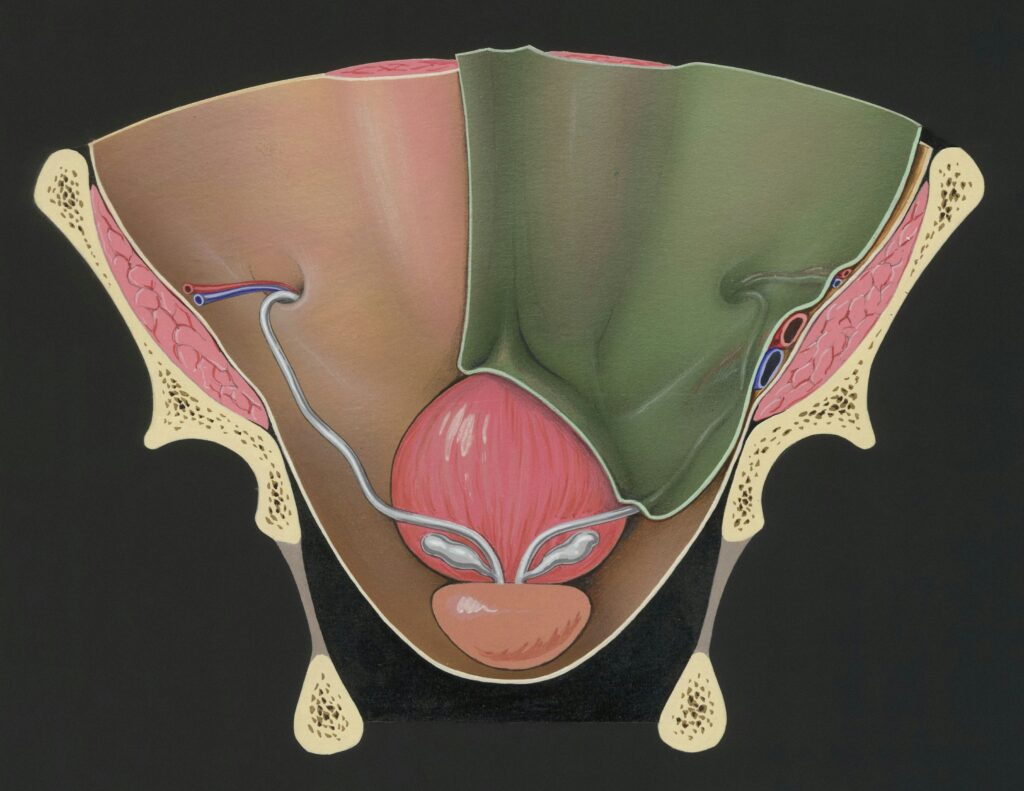
What is Implantation? (Complete Beginner Guide)
Implantation is the early stage of pregnancy when a fertilized egg attaches to the lining of the uterus. Understanding this process helps you recognize early pregnancy signs and track your fertility journey.

Implantation Symptoms Day by Day (1–12 DPO)
Learn how implantation symptoms change day by day from 1–12 DPO, what early pregnancy signs to watch for, and how these symptoms relate to your implantation calculator and calendar results.
Implantation bleeding Vs Period bleeding
Learn about the color, timing, and signs of implantation bleeding and how it differs from a normal period. This guide helps you understand early pregnancy spotting so you can better track your cycle and know when to take a pregnancy test.s.