
Implantation Symptoms Day by Day (1–12 DPO)
Trying to conceive can be an emotional and confusing journey, especially during the days after ovulation when every small change in the body feels meaningful. One of the most searched and medically accurate ways to track early pregnancy changes is by using DPO (Days Past Ovulation). This guide explains implantation symptoms day by day from 1 to 12 DPO, helping you understand what may be happening inside your body, when implantation usually occurs, and when pregnancy testing may become reliable.
What Is Days Past Ovulation (DPO)?
DPO stands for Days Past Ovulation, a term widely used by doctors, fertility specialists, and TTC (trying to conceive) communities. It refers to the number of days that have passed since ovulation occurred. Because implantation and early pregnancy symptoms are closely tied to ovulation rather than calendar dates, DPO provides a more accurate and standardized timeline.
DPO counts begin the day after ovulation, not after intercourse or a missed period
Implantation usually happens between 6–10 DPO, most commonly around 8–9 DPO
Early pregnancy symptoms often overlap with PMS, making DPO tracking especially useful
Since implantation timing depends on ovulation, you can use our implantation calculator to estimate your most likely implantation window based on your cycle.
1 to 12 DPO Pregnancy Symptoms: What to Expect
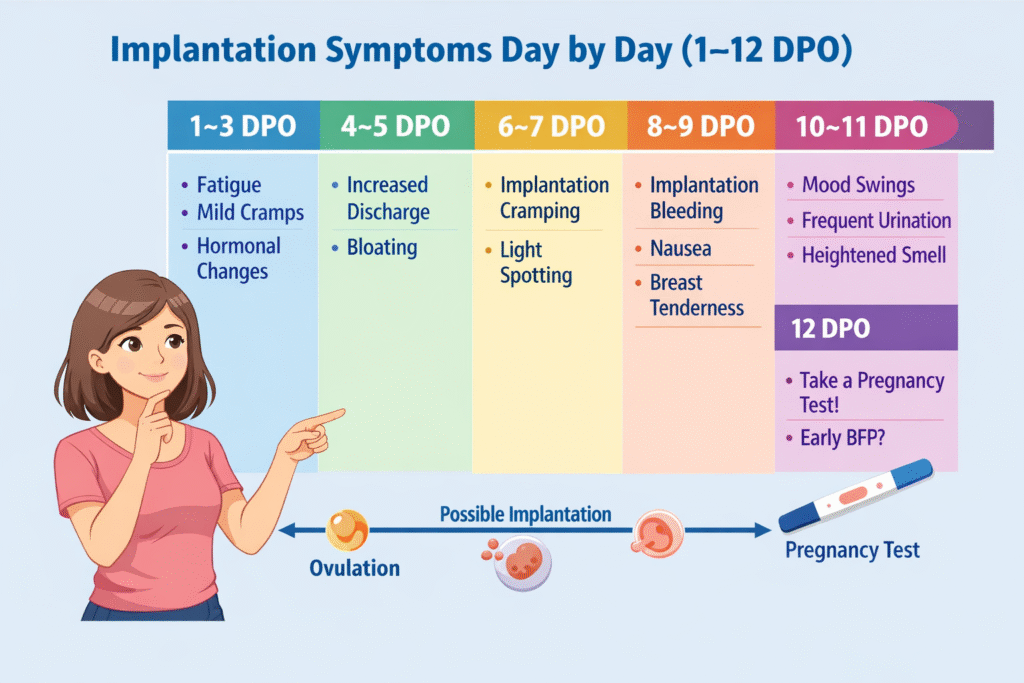
The period from ovulation to a missed period—commonly known as the two‑week wait—can feel physically and emotionally overwhelming. During these 12 days past ovulation (DPO), your body goes through a series of hormonal and biological changes whether pregnancy occurs or not. This uncertainty often leads people to closely monitor every sensation, wondering if it is a sign of early pregnancy.
It is important to understand that not everyone experiences noticeable symptoms during 1–12 DPO. Some people may feel multiple changes and not be pregnant, while others may feel absolutely nothing and still conceive successfully. Many early pregnancy symptoms closely resemble luteal phase or PMS symptoms because both are driven by progesterone.
With that in mind, symptoms alone are not a definitive indicator of pregnancy. Only a pregnancy test that detects hCG can confirm conception. However, understanding what typically happens inside the body during each DPO can help you interpret symptoms more realistically and reduce unnecessary stress during your fertility journey.
During 1–12 DPO, the body may be experiencing:
Rising progesterone levels to support a potential pregnancy
Movement and development of a fertilized egg (if conception occurred)
Possible implantation of the embryo into the uterine lining
Gradual hormonal shifts that may later trigger early pregnancy symptoms
Below is a detailed, day‑by‑day breakdown of the most common biological processes and symptoms you may experience during this phase.
1 to 3 DPO Symptoms: Progesterone Rises
During 1–3 DPO, ovulation has already occurred and the body shifts fully into the luteal phase. Progesterone becomes the dominant hormone, which is why many people search for luteal phase symptoms during this time. Implantation has not happened yet, even if fertilization occurred.
At this stage, some people wonder about 48 hours after conception symptoms, but it is important to understand that true pregnancy symptoms usually cannot appear this early. Most sensations are related to normal post-ovulation hormonal changes rather than pregnancy.
Common experiences during 1–3 DPO include:
Mild bloating or abdominal pressure during the luteal phase
Breast sensitivity or fullness caused by progesterone
Fatigue or sleepiness as hormones rise
These symptoms are normal luteal phase symptoms and cannot confirm pregnancy.
4 DPO Symptoms: Making Moves
By 4 DPO, if fertilization occurred, the fertilized egg continues dividing as it travels through the fallopian tube toward the uterus. This journey is microscopic and cannot be felt directly, which is why many people feel little to no difference on this day.
Hormonal activity remains high, and progesterone continues to influence the body. Any symptoms felt are still related to the luteal phase rather than implantation.
Possible symptoms at 4 DPO include:
Light cramping or pelvic awareness
Increased creamy or white cervical discharge
Subtle mood changes or irritability
These sensations are normal and occur in both pregnant and non-pregnant cycles.
5 DPO Symptoms: Blastocyst Development
Around 5 DPO, a fertilized egg may reach the blastocyst stage, which is necessary for implantation. The uterus continues thickening its lining in response to progesterone, creating a supportive environment.
Although implantation has not yet occurred for most people, hormonal shifts may begin to feel more noticeable.
You may experience:
Increased fatigue or low motivation
Digestive changes such as constipation
Heightened emotional sensitivity
These symptoms are still not a reliable indicator of pregnancy.
6 DPO Symptoms: End of the Fallopian Journey
At 6 DPO, the blastocyst usually enters the uterus. For some people, implantation may begin around this time, though it is still early.
Because the body does not yet produce measurable hCG, symptoms remain subtle and inconsistent.
Possible signs include:
Mild pulling or pressure in the lower abdomen
Continued breast tenderness
Increased tiredness
Many people feel no symptoms at all, which is completely normal.
7 DPO Symptoms: Possible Implantation
Seven DPO is the earliest point at which implantation may begin. During implantation, the embryo attaches to the uterine lining, which may trigger localized inflammation and subtle hormonal signals.
Some individuals notice changes, while others feel nothing.
Possible 7 DPO symptoms include:
Light implantation cramps or twinges
Brief spotting (not common)
Sudden fatigue or warmth
Absence of symptoms does not mean implantation has not occurred.
8 DPO Symptoms: Implantation Continues
Eight DPO is one of the most common implantation days. As implantation progresses, the body may begin producing very small amounts of hCG, which is why people start searching for after fertilisation symptoms at this stage.
Some early implantation-related changes may appear, although many people still feel nothing at all.
Possible 8 DPO symptoms include:
Light pink or brown spotting
Mild uterine sensations or cramping
Digestive changes, including implantation diarrhea in some cases
These symptoms are usually brief and easy to confuse with PMS.
9 DPO Symptoms: Light Bleeding
By 9 DPO, implantation is often complete, and hCG slowly enters the bloodstream. This is when early pregnancy symptoms may begin to differentiate from PMS.
Possible symptoms include:
Implantation spotting that is lighter than a period
Increased breast tenderness
Mild nausea or appetite changes
Testing is still early and may result in false negatives.
10 DPO Symptoms: Hormones Surge
By 10 DPO, implantation has usually already occurred in successful cycles, and the hormone hCG (human chorionic gonadotropin) begins increasing more noticeably. This hormone is responsible for triggering many early pregnancy symptoms and signaling the body to continue supporting the uterine lining.
At this stage, symptoms may start to feel more “real” compared to earlier DPO days, but they can still vary greatly from person to person. Some individuals feel clear changes, while others may still feel nothing at all.
Common 10 DPO experiences include:
Fatigue or dizziness, as progesterone and hCG affect blood pressure and energy levels
Heightened sense of smell, which may cause food aversions or nausea
Breast heaviness or soreness, often stronger than typical PMS-related tenderness
It is also common to receive a negative pregnancy test at 10 DPO. This does not mean pregnancy has not occurred, as hCG levels may still be too low to detect.
11 DPO Symptoms: Early Pregnancy Signs
At 11 DPO, hCG levels may be high enough to begin affecting multiple body systems more consistently. For many people, this is when early pregnancy starts to feel more apparent, especially if implantation occurred around 7–9 DPO.
Hormonal changes during this phase can influence digestion, mood, and urinary frequency.
Possible 11 DPO symptoms include:
Nausea or queasiness, particularly in the morning or when smelling strong odors
Frequent urination, caused by increased blood flow to the kidneys
Emotional sensitivity, including anxiety, irritability, or sudden mood shifts
Some individuals may see a faint positive pregnancy test at 11 DPO, while others may still test negative despite being pregnant.
12 DPO Symptoms: Is It Time to Test Yet?
By 12 DPO, pregnancy hormones are typically high enough to produce clearer physical signs and more reliable test results. For many people, this is the earliest point at which a home pregnancy test can accurately detect hCG in urine.
Symptoms at 12 DPO may feel more distinct compared to earlier days, although some people still experience very mild or no symptoms at all.
Common 12 DPO signs include:
Missed or unusually light period, as the uterine lining is maintained by hCG
Persistent fatigue, even after adequate sleep
Breast and nipple changes, such as sensitivity, tingling, or darkening of the areola
If a test is negative at 12 DPO but your period does not arrive, retesting after 48 hours is often recommended for a more accurate result. If you are unsure whether it is too early to test, read our detailed guide on when to take a pregnancy test to understand the best timing for accurate results.
Can You Take a Pregnancy Test at 12 DPO?
Yes, many people can get a positive pregnancy test at 12 DPO, especially with sensitive tests. However, results depend on when implantation occurred and how quickly hCG levels rise.
If your result is negative but your period does not start, retesting after 48 hours is recommended for better accuracy.
Symptoms After Ovulation: Pregnant or Not?
According to medical experts at Mayo Clinic, early pregnancy symptoms can vary widely, and some people may not notice any changes until after a missed period.
After ovulation, the body enters the luteal phase, where progesterone rises whether pregnancy occurs or not. This is why many early pregnancy symptoms, such as bloating, fatigue, and breast tenderness, can feel similar to PMS.
If implantation occurs, the body begins producing hCG, which gradually changes how symptoms develop. However, in early DPO, these differences are often very subtle. Because of this overlap, symptoms alone cannot confirm pregnancy, and testing at the right time is essential.
Can DPO Symptoms Be Mistaken for PMS?
Many early pregnancy symptoms during the DPO phase closely resemble PMS, making it difficult to tell the difference without proper tracking or testing.
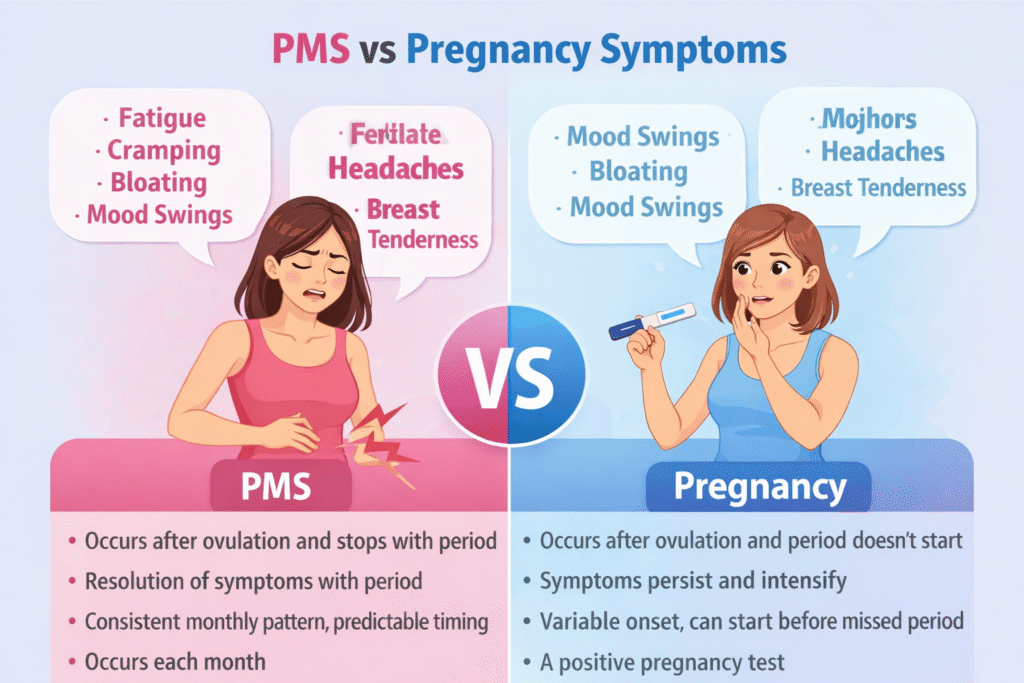
Yes, DPO symptoms are very commonly mistaken for PMS. Both PMS and early pregnancy symptoms are driven by progesterone during the luteal phase, which is why searches like can you have pregnancy symptoms before implantation are very common.
Shared PMS and early pregnancy symptoms include:
Breast soreness or swelling
Mood changes, anxiety, or irritability
Bloating during ovulation or the luteal phase, which some people worry could be a bloating during ovulation sign of pregnancy
In reality, pregnancy symptoms before implantation are unlikely, and the only reliable way to know is to wait for implantation and test appropriately.
When to See a Doctor
You should consider contacting a healthcare provider if:
You have severe pain or heavy bleeding
Pregnancy tests are positive and you need confirmation
Symptoms feel unusual or concerning
Early medical guidance can provide reassurance and proper care.
Plan for Pregnancy with Cycle Tracking
Tracking ovulation, DPO, and implantation timing can provide clarity and reduce stress during the TTC journey.
Benefits include:
Better understanding of your fertile window
Knowing when to test accurately
Identifying patterns in your cycle
Using reliable tracking tools and medically accurate timelines helps you make informed decisions throughout your pregnancy journey.