
IVF Due Date Calculator
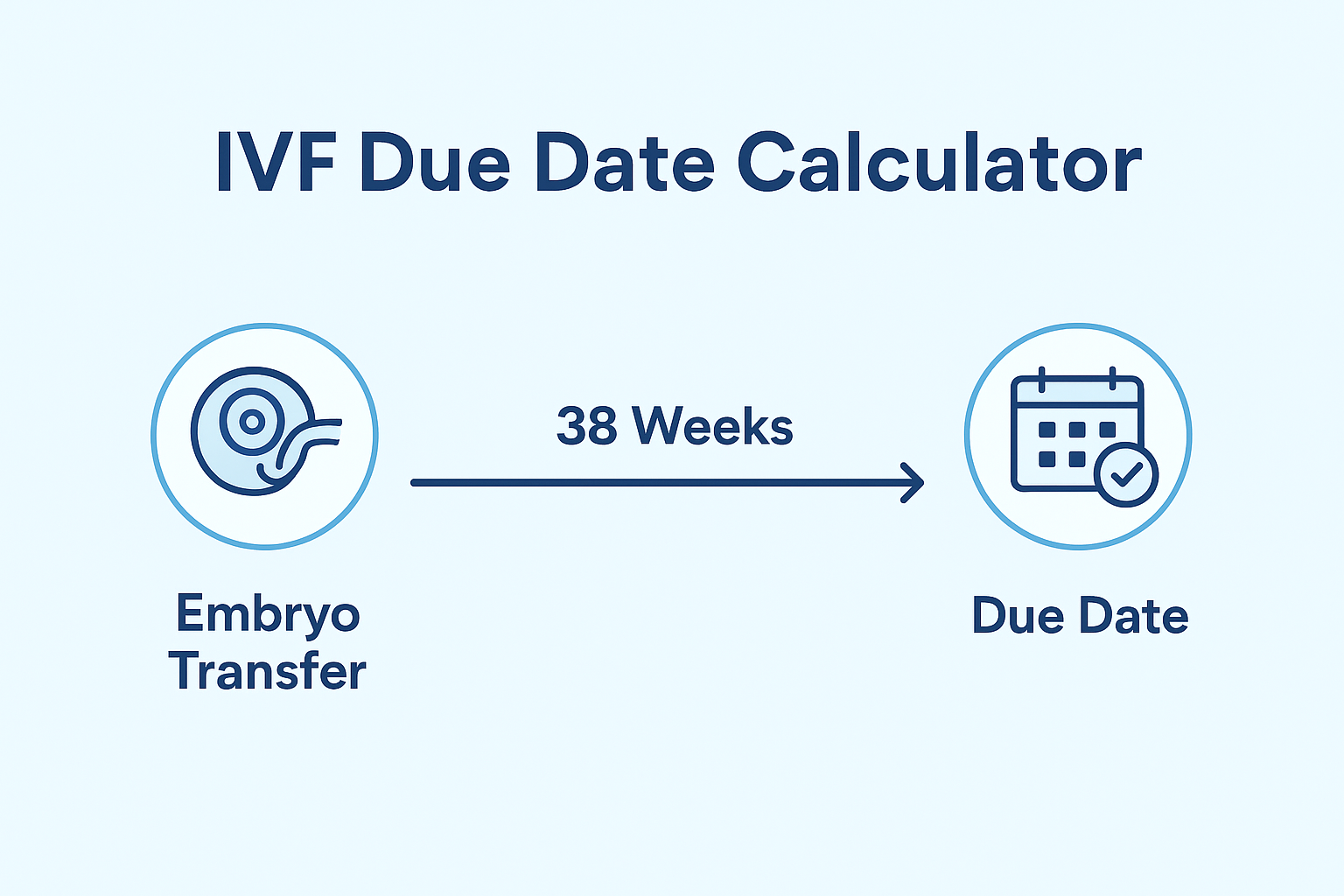
Calculate your estimated due date based on the embryo transfer date.
Want to better understand your conception timeline? Try our Ovulation Calculator for more accurate estimates.”
What is an IVF Pregnancy Due Date?
An IVF pregnancy due date is the estimated date when your baby is expected to be born following an IVF procedure. Unlike natural conception, where the exact date of fertilization is often unknown, IVF provides precise tracking of fertilization and embryo transfer, which allows for highly accurate prediction of the due date.
The due date is calculated based on the stage of the embryo at transfer—either 3-day, 5-day, or frozen embryo transfer (FET)—and the exact day it was placed into the uterus. This precision is valuable for expecting parents, as it helps with planning prenatal care, monitoring developmental milestones, and scheduling important checkups.
Key Takeaways:
Calculated from the exact embryo transfer date
Adjusted according to embryo stage at transfer
Provides a timeline of pregnancy milestones for planning and monitoring
IVF Transfer Types and Their Impact on Due Dates
3-Day Embryo Transfer
In a 3-day embryo transfer, the embryo is transferred to the uterus three days after fertilization, at the cleavage stage. Because the embryo is still very early in its development, the due date calculation starts from the fertilization day and adds 266 days (38 weeks) to estimate delivery.
Important Notes:
Common in traditional IVF cycles
Slightly less advanced than a 5-day blastocyst
Due dates may vary slightly if the embryo develops slower or faster than average
5-Day Embryo Transfer
A 5-day transfer uses an embryo at the blastocyst stage, which is more developed and closer to implantation. The due date is calculated similarly, but the 5-day embryo stage is considered, so the calendar adjustment differs slightly from a 3-day transfer.
Considerations:
Higher implantation success rates for some patients
Due date is generally within the same ±1–2 weeks range as a 3-day transfer
Often preferred in modern IVF protocols for better implantation predictability
Frozen Embryo Transfer (FET)
Frozen embryos can be thawed and transferred during either a natural or medicated cycle. Because the exact thawing and transfer dates are known, the due date is highly precise.
Key Points:
Can be used months or years after initial egg retrieval
Timing is adjusted based on the natural cycle or hormonal preparation
Often paired with monitoring tools to optimize implantation
How to Calculate Your IVF Due Date
Calculating your IVF due date can be done in multiple ways:
Using an IVF Due Date Calculator – Enter your embryo transfer type and date to get an instant result.
Manual Calculation – For fresh transfers:
Add 266 days (38 weeks) to the day of fertilization
Adjust for embryo stage:
3-day transfer → count from fertilization
5-day transfer → add 2 days to account for blastocyst stage
Confirmation by Ultrasound – Ultrasounds around 6–8 weeks of gestation may adjust the due date slightly, confirming embryonic development and growth.
Difference from Natural Conception:
For pregnancies without IVF, due dates are generally calculated from the first day of the last menstrual period (LMP). Since the exact day of fertilization is unknown in natural conception, IVF due dates are typically more accurate.
Accuracy of IVF Due Dates

IVF due dates are highly reliable, with most deliveries occurring within ±1–2 weeks of the predicted date. Accuracy depends on several factors:
Embryo quality and development speed
Maternal health and uterine environment
Individual variations in implantation timing
What Moms Report:
Many IVF babies arrive on or slightly before the estimated date
Some pregnancies may extend slightly beyond the due date, similar to natural pregnancies
Regular prenatal monitoring ensures timely care, regardless of slight variations
Benefits of Using the IVF Due Date Calculator
Using an IVF Due Date Calculator can make your pregnancy journey much easier and more predictable. Here’s how it helps:
Provides an Accurate Estimated Delivery Date
Because IVF tracks the exact day the embryo was transferred, the calculator can give a highly precise estimate of when your baby is likely to be born. This is more accurate than traditional pregnancy calculations based on your last menstrual period, allowing you to plan ahead with confidence.Visual Timeline of Trimesters and Key Milestones
The calculator doesn’t just give a single date—it shows a complete pregnancy timeline. You can see when each trimester starts, important milestones like ultrasounds, fetal development stages, and other key events. This visual guide helps you understand your pregnancy week by week.Helps Schedule Prenatal Appointments and Ultrasounds
Knowing your estimated due date allows you to plan prenatal visits, ultrasounds, and tests at the right times. This ensures that both you and your baby receive the best possible care throughout pregnancy.Supports Planning for Birth Preparation and Maternity Leave
An accurate due date helps you prepare for delivery in advance. From arranging hospital plans to organizing maternity leave or childcare, having a clear timeline reduces stress and keeps everything organized.Simple, User-Friendly, and Fast to Use
The IVF Due Date Calculator is designed to be quick and easy, even for first-time users. You just enter your embryo transfer type and date, and it instantly gives you a clear, reliable due date along with a full pregnancy timeline.
Frequently Asked Questions
1. What week does an IVF transfer happen?
IVF transfers typically occur between week 3 and week 5 of the menstrual cycle. The exact timing depends on ovarian stimulation protocols and embryo readiness.
2. How many weeks pregnant are you after a five-day embryo transfer?
Pregnancy is calculated starting two weeks before egg retrieval plus the embryo age. For a 5-day transfer, you would be considered approximately 2–3 weeks pregnant on the day of transfer.
3. Is your due date different with IVF?
Yes, IVF due dates are slightly different because the exact fertilization date is known. This allows more precise tracking compared to LMP-based calculations.
4. Are IVF babies usually early or late?
Most IVF babies are born on time. Slightly early deliveries are common, but the majority fall within the predicted window.
5. Do IVF babies need to be induced?
Induction is not typically required solely because of IVF. Decisions are based on maternal health, fetal growth, and pregnancy progression.
6. Do IVF pregnancy symptoms start at the same time as natural pregnancies?
Generally yes. However, some women notice earlier implantation symptoms due to precise timing and hormonal support in IVF protocols.
7. How accurate is your due date with IVF?
IVF due dates are more accurate than natural conception estimates, especially when the embryo transfer type and stage are considered. Most estimates fall within 1–2 weeks of the actual delivery.
What If You Don’t Know Your Embryo Day?
If you’re unsure whether your embryo was day-3 or day-5:
Check your clinic report
Look at your embryo grading sheet
Compare your pregnancy progress with ultrasound measurements
Most clinics transfer day-5 blastocysts, so that is the likely case.
Factors That Can Shift an IVF Due Date
Even with IVF accuracy, some things may cause early or late delivery:
Late or early implantation
Placenta issues
Preterm labor
Twin pregnancy
Maternal age
High-risk pregnancy
Previous C-section
So the due date is an estimate, not a guarantee.
IVF Due Date Week-By-Week Timeline
The journey through IVF and into pregnancy is a testament to perseverance and hope. Use the IVF due date calculator on this page to mark the culmination of that journey.
Once you have your Estimated Due Date:
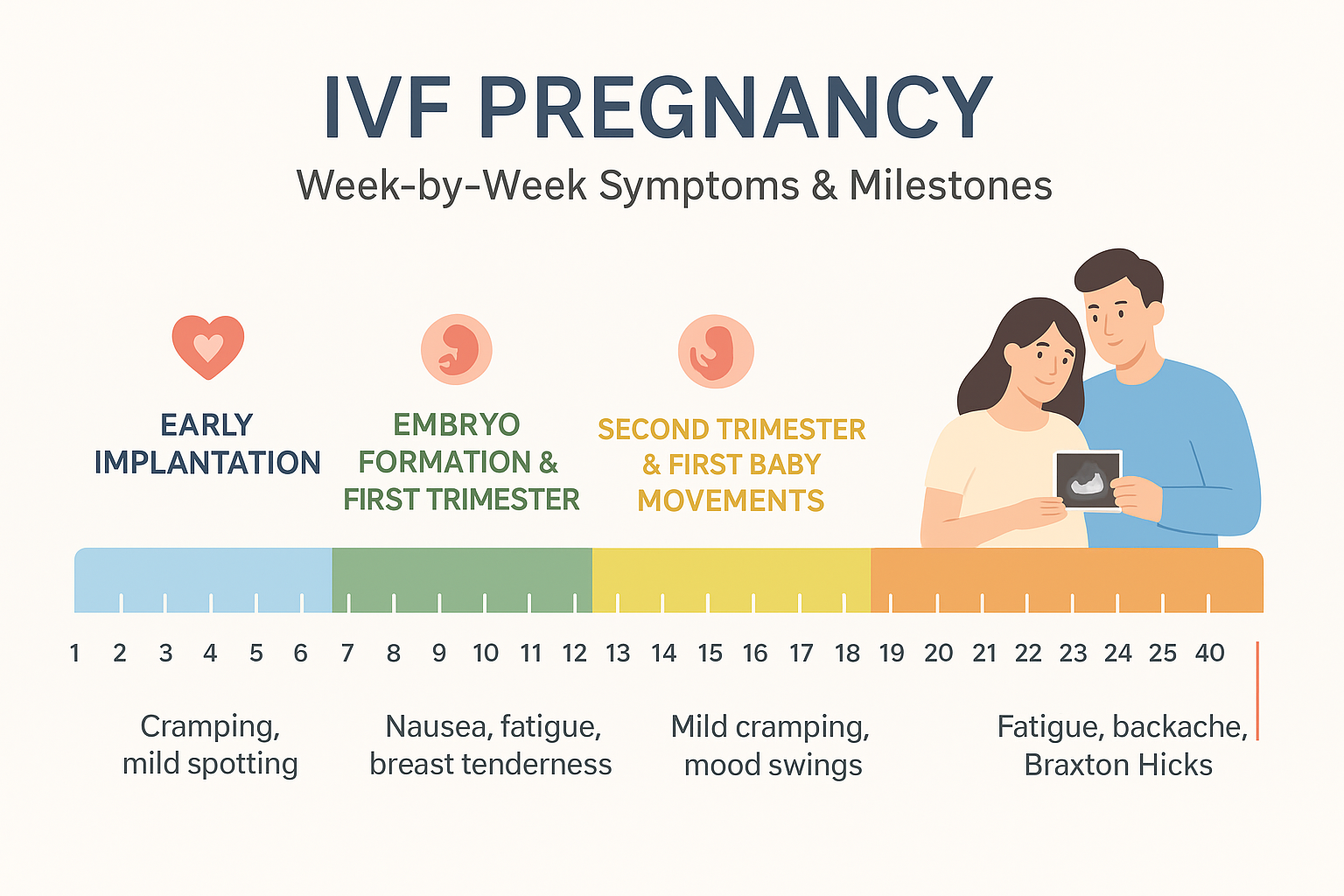
First Trimester (Weeks 1-13): Focus on prenatal appointments and confirming the viability of the pregnancy.
Second Trimester (Weeks 14-27): The “honeymoon period.” Use this time to announce your pregnancy, begin planning for the nursery, and feel the baby’s first movements.
Third Trimester (Weeks 28-40+): The final push. Complete birthing classes, finalize your baby’s room, and prepare for labor and delivery.
our IVF due date calculator provides the essential first step in organizing this incredible adventure. It transforms the question “When?” into a tangible, celebrated date. Trust the science, trust your medical team, and enjoy the remarkable pregnancy that you have worked so hard to achieve.
Frequently Aasked Questions
How does IVF get you pregnant?
IVF (In Vitro Fertilization) helps you get pregnant by fertilizing the egg and sperm outside the body in a lab. When an embryo forms, doctors place it into the uterus, where it can implant and develop into a pregnancy.
What is an IVF baby called?
An IVF baby is simply called a normal baby conceived through IVF. Some people also use the term “test-tube baby,” but medically and socially, they are just like any other baby.
Is it painful to have IVF?
IVF is generally not very painful, but some steps may cause mild discomfort.
Hormone injections can cause slight soreness.
Egg retrieval is done under sedation, so you usually don’t feel pain.
Embryo transfer feels like a regular pelvic exam.
Overall, most women describe IVF as uncomfortable but not painful.
Is husband’s sperm used in IVF?
Yes. If available and healthy, the husband’s or partner’s sperm is used.
If sperm quality is an issue, donor sperm can be used as an alternative.
Are all IVF babies female?
No. IVF babies can be male or female, just like natural pregnancies.
The gender depends on the sperm that fertilizes the egg.
IVF does not automatically create female babies.
What are the risks of IVF?
IVF is generally safe, but like any medical procedure, it carries some risks. Possible risks include:
Ovarian Hyperstimulation Syndrome (OHSS): mild to moderate bloating, discomfort; rarely severe.
Multiple pregnancy: higher chance of twins if multiple embryos are transferred.
Procedure-related risks: slight bleeding or infection after egg retrieval (rare).
Emotional stress: the process can be mentally and emotionally demanding.
Most of these risks are uncommon and are carefully managed by fertility specialists.
What is an IVF Due Date Calculator?
An IVF Due Date Calculator is a tool that helps you estimate your baby’s expected arrival date based on your IVF treatment details. Instead of using the last menstrual period (LMP), this calculator uses information like egg retrieval date, embryo transfer date, or the day of conception. This makes the due date more accurate for IVF pregnancies.