
Implantation bleeding vs Period bleeding: How to Tell the Difference Clearly
For women who are trying to conceive—or even those simply tracking their menstrual cycle—spotting before a period can create confusion. One of the most common questions is: “Is this implantation bleeding or the start of my period?”
The symptoms can sometimes overlap, which makes it difficult to tell the difference without understanding the biological processes behind each one. However, when you analyze factors like timing, flow, color, duration, and associated symptoms, the distinction becomes much clearer.
This detailed guide will help you accurately differentiate between implantation bleeding and menstrual bleeding, so you can better interpret what your body is signaling.
What Is Implantation Bleeding?
Implantation bleeding occurs when a fertilized egg successfully attaches itself to the lining of the uterus (endometrium). This process is a critical early stage of pregnancy. As the embryo embeds into the uterine wall, tiny blood vessels may rupture, leading to very light spotting.
This type of bleeding typically occurs between 6 to 12 days after ovulation (DPO), with most cases happening around 8–10 DPO. Because this timing is close to when a period is expected, many women confuse implantation bleeding with early menstruation.
It’s important to note that not all women experience implantation bleeding. In fact, many pregnancies occur without any noticeable spotting. When it does happen, it is usually subtle and may go unnoticed unless you are actively tracking your cycle.
What Is a Period?
A period, or menstruation, is a natural part of the menstrual cycle that occurs when pregnancy does not happen. After ovulation, if the egg is not fertilized, hormone levels (especially progesterone) drop. This triggers the shedding of the uterine lining, which results in menstrual bleeding.
Periods typically begin around 14 days after ovulation in a regular cycle and can last anywhere from 3 to 7 days. Unlike implantation bleeding, menstrual bleeding is heavier and follows a more predictable pattern—starting light, becoming heavier, and then tapering off.
Menstrual blood also contains tissue from the uterine lining, which is why it is thicker and may include clots.
Implantation vs Period: Key Differences Explained in Detail
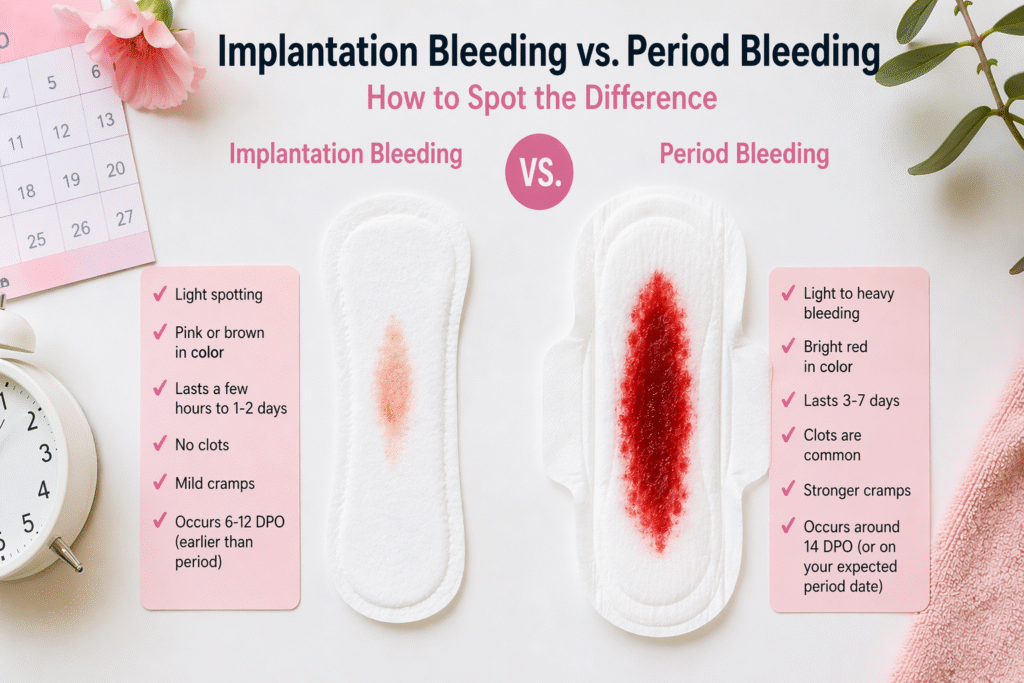
Understanding the differences requires looking beyond just “spotting vs bleeding.” Let’s break down each factor in depth:
1. Flow (Light vs Heavy Bleeding)
The most noticeable difference is the intensity of the flow.
- Implantation bleeding is extremely light. It may appear as a few drops or light spotting that doesn’t require a pad or tampon. Some women only notice it when wiping.
- Period bleeding starts light but quickly becomes moderate to heavy, requiring sanitary products and lasting several days.
If the bleeding becomes heavier over time, it is almost certainly a period rather than implantation.
2. Color (Pink/Brown vs Bright Red)
Color can provide an important clue:
- Implantation bleeding is usually light pink or brown. This happens because the blood is older and takes time to exit the body.
- Menstrual blood is typically bright red or dark red, indicating fresh and continuous bleeding.
Brown spotting before your expected period is often more consistent with implantation than menstruation.
3. Duration (Short vs Long)
The length of bleeding is another key factor:
- Implantation bleeding usually lasts from a few hours to a maximum of 1–2 days.
- Periods typically last between 3 to 7 days and follow a cycle of increasing and decreasing flow.
If bleeding continues beyond two days and becomes heavier, it is more likely to be a menstrual period.
4. Clots (Absent vs Present)
- Implantation bleeding: No clots are present because there is no shedding of the uterine lining.
- Period: Clots are common, especially on heavier days, due to the shedding of endometrial tissue.
The presence of clots is a strong indicator that you are experiencing a period rather than implantation.
5. Timing in the Cycle
Timing is one of the most reliable ways to differentiate:
- Implantation bleeding: Occurs before your expected period, typically 6–12 days after ovulation.
- Period: Occurs on or after your expected cycle date (around 14 DPO).
If you track ovulation, this becomes much easier to identify. Early spotting before your due period date may suggest implantation.
6. Cramping (Mild vs Intense)
Both implantation and periods can cause cramps, but the intensity differs:
- Implantation cramps are usually mild, brief, and may feel like a light pulling sensation.
- Period cramps are stronger, more persistent, and may radiate to the lower back or thighs.
Severe or prolonged cramps are more typical of menstruation.
7. Associated Symptoms
Symptoms can overlap, but subtle differences exist:
Implantation-related symptoms:
- Light spotting
- Mild cramping
- Breast tenderness
- Fatigue
- Slight nausea (in some cases)
These symptoms occur due to early hormonal changes, particularly the rise of hCG after implantation.
Period-related symptoms:
- Heavier bleeding
- Strong cramps
- Bloating
- Mood swings
- Headaches
These are caused by hormonal fluctuations and the shedding of the uterine lining.
Why Implantation Bleeding Is Often Confused with a Period
The main reason for confusion is timing. Implantation occurs just a few days before the expected period, so many women assume the spotting is simply an early or lighter period.
Additionally, early pregnancy symptoms can mimic PMS symptoms, including:
- Breast soreness
- Fatigue
- Mood changes
Because of this overlap, it’s easy to misinterpret what’s happening without closely analyzing flow, duration, and timing.
For more reliable information on implantation bleeding vs period bleeding, you can check trusted medical sources like the NHS for further reading.
Can Implantation Bleeding Turn Into a Period?
No—implantation bleeding and a period are two completely different biological processes.
If implantation is successful, the body begins producing pregnancy hormones (hCG), which prevent the uterine lining from shedding. This means a true menstrual period will not occur.
However, if implantation does not happen, hormone levels drop, and a period begins. In some cases, very early pregnancy loss (chemical pregnancy) may resemble a late or slightly heavier period.
When Should You Take a Pregnancy Test?
Timing your pregnancy test correctly is crucial for accurate results.
- Testing too early (before hCG rises) can lead to a false negative
- It is best to wait 2–3 days after suspected implantation or after a missed period
Using an implantation calculator can help estimate when implantation likely occurred, allowing you to choose the best testing window.
If you’re unsure whether your symptoms are due to implantation or your period, it’s important to know when to take a pregnancy test for accurate results.
When to Seek Medical Advice
While light spotting is often harmless, certain symptoms should not be ignored:
- Heavy bleeding similar to or worse than a period
- Severe abdominal or pelvic pain
- Dizziness or fainting
- Bleeding lasting longer than expected
These could indicate other conditions and should be evaluated by a healthcare professional.
Final Thoughts
Distinguishing between implantation bleeding and a period can feel confusing, especially when symptoms overlap. However, by focusing on key indicators—such as flow, color, duration, timing, and associated symptoms—you can make a more informed assessment.
Implantation bleeding is typically light, short, and occurs before your expected period, while menstrual bleeding is heavier, longer, and follows a predictable cycle. Tracking your ovulation and using tools like an implantation calculator can further improve accuracy.
Ultimately, the only definitive way to confirm pregnancy is through a properly timed pregnancy test. Until then, understanding these differences can help you interpret your body’s signals with greater confidence.
Frequently Asked Question
How do I know if it's implantation bleeding or my period?
Implantation bleeding is usually very light spotting that is pink or brown in color and lasts for a short time (a few hours to 1–2 days). It often does not include clots and is much lighter than a normal period. A period, on the other hand, is typically heavier, lasts several days, and is bright red or dark red in color, sometimes with clots and cramping.
What are the first signs of implantation?
The first signs of implantation can be very subtle and not everyone experiences them. When they do appear, they may include light spotting (implantation bleeding), mild cramping, a slight rise in body temperature, and early pregnancy-type symptoms such as fatigue or breast tenderness. These signs usually occur around 6 to 12 days after ovulation when the fertilized egg attaches to the uterine lining.
How many days pregnant am I if I have implantation bleeding?
Implantation bleeding usually occurs about 6 to 12 days after ovulation, which is roughly the time when you are considered around 3 to 4 weeks pregnant (calculated from the first day of your last menstrual period, not from conception). However, pregnancy “age” can vary depending on your cycle length and ovulation timing, so it is not an exact measurement.
What type of bleeding indicates pregnancy?
Light spotting known as implantation bleeding can sometimes indicate early pregnancy. It is usually very light in flow, pink or brown in color, and lasts for a short time (a few hours to 1–2 days). It typically occurs when the fertilized egg attaches to the uterine lining, around 6 to 12 days after ovulation. Unlike a menstrual period, it does not usually become heavy or contain clots’
What color is implantation bleeding?
Implantation bleeding is usually light pink or brown in color. It may sometimes appear as very light red spotting, but it is typically much lighter than a normal period. The color can vary depending on how quickly the blood leaves the body—older blood tends to look brown, while fresher spotting may look pink.