
IVF Pregnancy & Due Date Guide: Timeline, Symptoms, and How IVF Due Dates Are Calculated
IVF (In Vitro Fertilization) has given millions of couples the chance to conceive and experience a healthy pregnancy. Because IVF works differently from natural conception, parents often have questions about how due dates are calculated, how the timeline progresses, and what symptoms to expect.
What Is IVF and How Does It Work?
IVF, or in vitro fertilization, is an assisted reproductive technology where an egg and sperm are combined in a laboratory to create an embryo. Once the embryo develops, it is transferred into the uterus, where implantation and pregnancy can occur. According to the Mayo Clinic, IVF is a form of assisted reproductive technology used to help couples conceive.
IVF is often recommended for people with:
Blocked fallopian tubes
Male factor infertility
PCOS or irregular ovulation
Unexplained infertility
Hormonal or ovarian issues
Genetic screening needs (PGT-A)
Previous pregnancy losses
Unlike natural conception, where fertilization and implantation happen inside the body, IVF allows doctors to precisely track embryo development. This clinical precision helps determine pregnancy dating more accurately.
How IVF Pregnancy Is Different From Natural Pregnancy
In natural conception, your due date is calculated from the first day of your last menstrual period (LMP), even though conception happens around two weeks later.
In IVF pregnancy:
You know the exact day the embryo was created
You know whether the embryo was transferred on Day 3 or Day 5
You know the exact embryo transfer date
This level of accuracy makes IVF due date calculation more precise.
Key Differences
| Natural Pregnancy | IVF Pregnancy |
|---|---|
| Conception date unknown | Conception (fertilization) date is known |
| Due date based on LMP | Due date based on embryo age + transfer date |
| Ovulation varies | Controlled stimulation cycle |
| Implantation unpredictable | Expected implantation window is known |
Because IVF is a controlled process, due dates are typically more accurate and reliable than natural-conception pregnancies.
How IVF Due Dates Are Calculated
Your IVF due date depends on three factors:
Whether the embryo was fresh or frozen
Whether it was a Day 3 cleavage-stage embryo or a Day 5 blastocyst
Your embryo transfer date
Standard IVF Pregnancy Dating Method
A Day 3 embryo is considered equivalent to 3 days past ovulation
A Day 5 embryo is equivalent to 5 days past ovulation
Pregnancy lasts about 266 days from conception or 280 days from LMP.
Basic IVF Due Date Formula
Day 5 embryo transfer: Add 261 days to transfer date
Day 3 embryo transfer: Add 263 days to transfer date
Or simply add 38 weeks to the fertilization date, then adjust by embryo age at transfer.
IVF Due Date Calculator (The Easy Way)
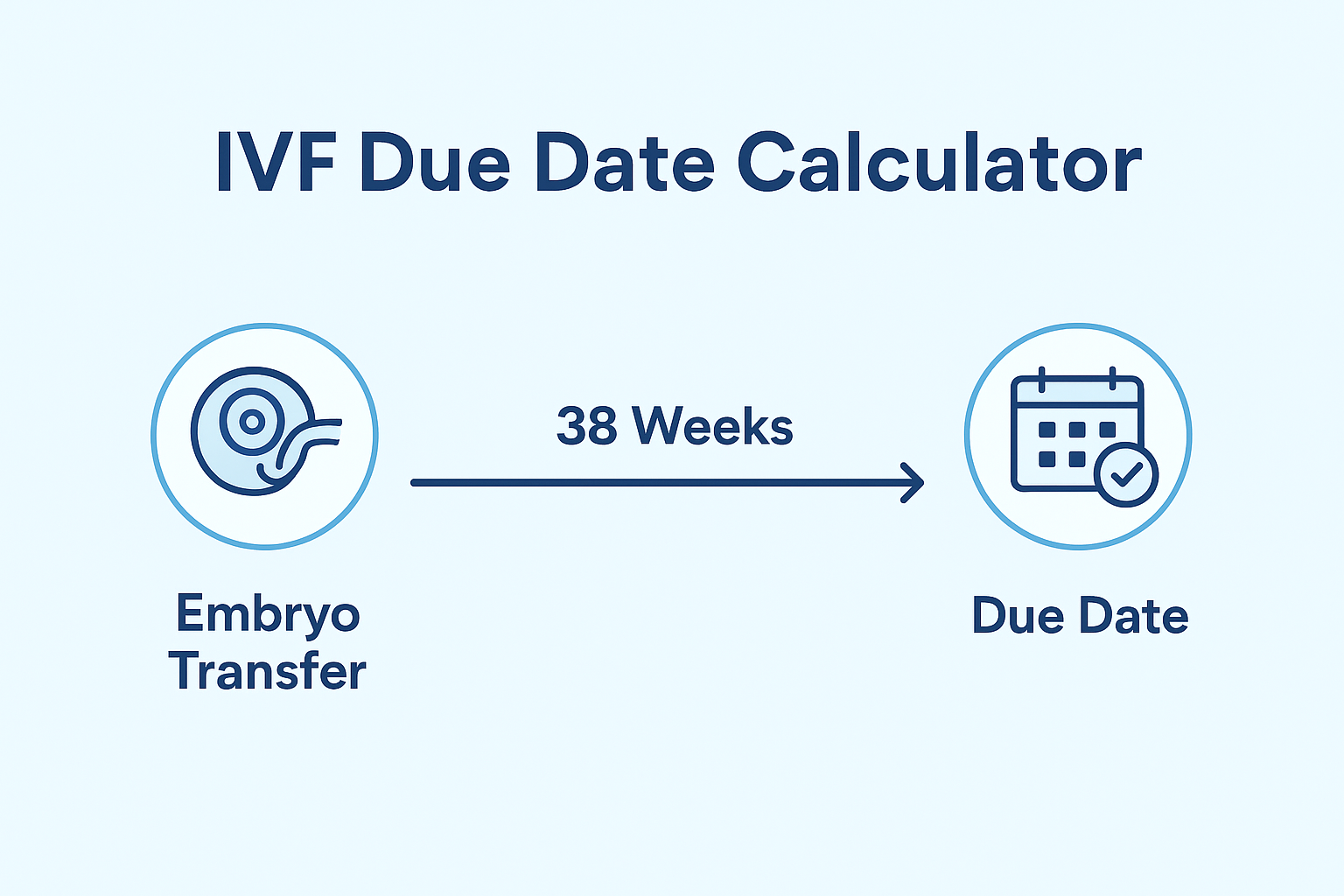
Manually counting dates is confusing, especially with different embryo stages and protocols. Instead of calculating your due date yourself, you can use a reliable online tool designed specifically for IVF pregnancies. Use our free IVF Due Date Calculator to instantly find your expected due date as per your embryo transfer type (Day 3 or Day 5).
Your IVF due date depends on:
Embryo age at transfer
Fresh vs frozen cycle
Stimulated vs natural FET
Transfer date
A calculator automatically adjusts for all these factors and provides:
✔ Expected due date
✔ Gestational age
✔ Embryo development stage
✔ Pregnancy week timeline
IVF Pregnancy Timeline: Week-by-Week Overview
Understanding the IVF pregnancy journey helps reduce anxiety and gives clarity about what’s normal.
Week 1_2 After Embryo Transfer
Embryo attaches to the uterine lining
HCG begins to rise
Light spotting or mild cramping may occur
Pregnancy test usually taken at 9–14 days post-transfer
Weeks 3_4
HCG increases rapidly
First positive pregnancy test
Early pregnancy symptoms appear:
Fatigue
Sore breasts
Bloating
Mild nausea
Weeks 5-6
First ultrasound
Gestational sac and yolk sac visible
Fetal heartbeat by around week 6
Second Trimester (Weeks 7_12)
Miscarriage risk decreases after heartbeat detected
Nausea, vomiting, fatigue increase
Placenta begins to form
Monitoring may include repeat HCG tests or ultrasounds
Second Trimester (Weeks 13_28)
Energy levels rise
Baby’s organs develop rapidly
Gender determination possible at 16–20 weeks
Anatomy scan at week 20
IVF pregnancies generally follow the same development as natural pregnancies once implanted.
Third Trimester (Weeks 29-40)
Baby gains weight steadily
Monitoring increases for mothers over 35 or with high-risk conditions
Many IVF pregnancies naturally reach full term (39–40 weeks)
Fresh vs Frozen Embryo Transfer: Does It Affect the Due Date?
Medically, the due date calculation is the same for both cycles, but there are differences in implantation patterns:
Fresh Embryo Transfer
Embryo is transferred 3–5 days after retrieval
Implantation can be slightly slower due to ovarian stimulation
Due date reliability is high but can vary a bit
Frozen Embryo Transfer (FET)
Embryo is thawed and transferred in a hormonally prepared cycle
Implantation is often more stable
Due date tends to be more predictable
However, the gestational age calculation remains identical.
Common Symptoms After IVF Transfer
Normal Symptoms
Cramping
Bloating
Mild spotting
Breast tenderness
Fatigue
Increased urination
Implantation spotting around Day 6–10
Symptoms That Need Medical Attention
Heavy bleeding
Severe abdominal pain
Fever
Rapid bloating
Signs of OHSS worsening
Remember: IVF symptoms can feel stronger because of hormonal medications.
IVF Success Rates and What Affects Them
Success depends on several factors, including:
Maternal age
Egg quality
Embryo quality
Uterine health
Genetics
Lifestyle
Previous pregnancy history
Average IVF Success Rates
Under 35: 45–55% per cycle
Age 35–37: 35–40%
Age 38–40: ~20–25%
Over 40: 5–10% depending on egg quality
FET cycles often show slightly higher success rates due to better uterine preparation.
Common IVF Due Date Mistakes & How to Avoid Them
Calculating your due date after IVF can be tricky, and even small mistakes can cause confusion or unnecessary stress. Here are some of the most common IVF due date errors and tips to avoid them:
Relying Only on LMP (Last Menstrual Period)
Unlike natural conception, IVF cycles are highly controlled. Using your last period as a reference can give an inaccurate due date since embryo transfer may occur days or even weeks after ovulation.
Tip: Always use the date of your embryo transfer or the exact fertilization date provided by your clinic.Ignoring the Type of Embryo Transfer
Day 3 and Day 5 (blastocyst) transfers affect the due date calculation. Confusing these can shift your estimated delivery by several days.
Tip: Confirm whether your transfer was Day 3 or Day 5 and use that in your calculations.Not Accounting for Frozen vs. Fresh Transfers
Frozen embryo transfers might not match the natural ovulation timeline, so assuming it aligns with a typical cycle can be misleading.
Tip: Always refer to your clinic’s guidance for frozen embryo transfers to set the correct due date.Skipping Ultrasound Confirmation
Estimations without early ultrasounds can sometimes be off by a week or more, especially if there are multiple embryos or delayed implantation.
Tip: Schedule an early ultrasound (usually around 6–8 weeks) to confirm the due date and growth.Assuming All IVF Pregnancies Follow Standard Timelines
Every IVF journey is unique, and embryo implantation timing can vary. Expecting a “one-size-fits-all” due date can lead to stress.
Tip: Use IVF-specific calculators and clinic-provided data rather than general pregnancy charts.
By being aware of these common mistakes and double-checking with your fertility clinic, you can confidently track your pregnancy timeline and avoid unnecessary confusion.